Scoping out ducks – birds on the move

And so it happened today. I was at Mogadore Reservoir scoping a raft of Ring-necked Ducks when I went back to the car to get my camera. I then proceeded to set up for taking a picture, and the words flashed: “no card in reader.” I had left my sd card at home… no pictures. This is the first time that I have done this ever, and I was more than a little frustrated. So, no pics of pretty ducks in a row.

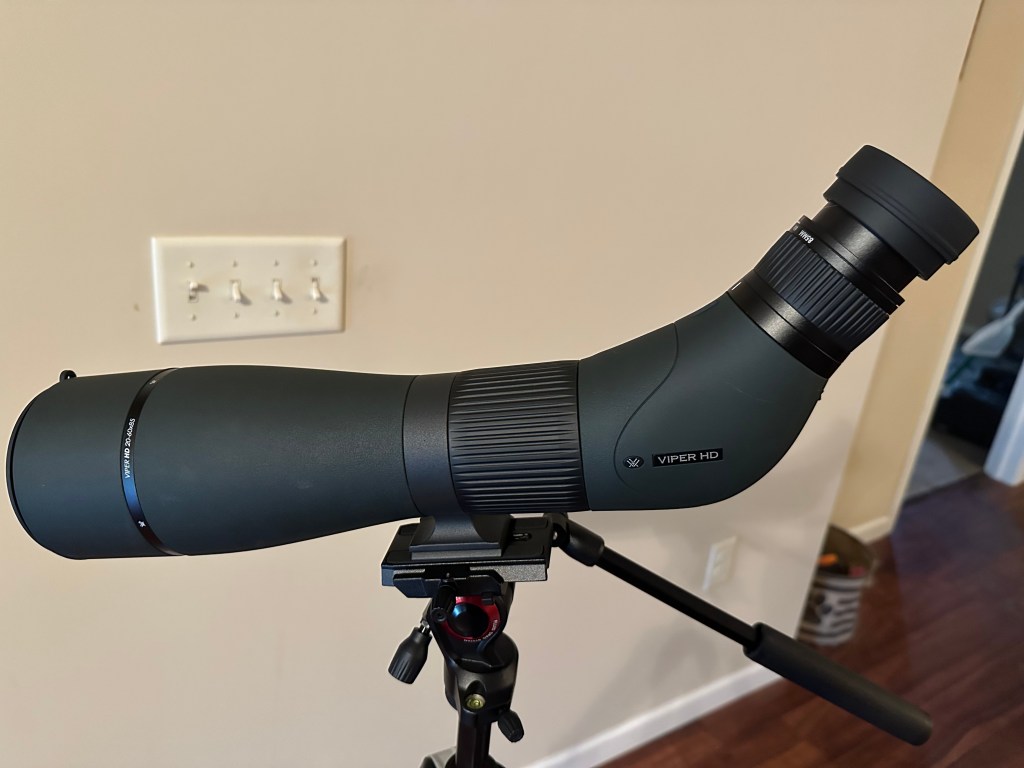
I did, however, get the opportunity to try out my new spotting scope set-up, and it’s great. The weight now is perfect since I swapped out the tripods. And the tripod/head combo is sturdy in the field, providing a perfectly shake-free viewing through the scope. The scope viewing area is bright at all levels of magnification, and focusing was easy to get a nice, sharp image. It was exciting to view the Ring-necks, American Wigeons and a lone Redhead through the lens of the scope, up close and personal. Zooming in is nice and smooth, and maintains overall sharpness as the subject takes up more of the field-of-view.

On another note, the birds, they are on the move. Northern Pintails have been around and are almost gone from local haunts, as have other ducks such as Scaup, Bufflehead, Redhead and Canvasback. Ring-necked Ducks are still foraging locally, as evidenced today, and by other field trip reports, and Green-winged Teal have begun to show up. There aer also some Northern Shovelers still foraging about. Red-winged Blackbirds have shown up in fair numbers, Grackles are being seen, as well as Towees and Meadowlark, and there are reports of Killdeer being seen, and also Yellow-rumped Warblers. So there is a continuing shift of birds occurring, as we head toward the main push of ducks, and the beginnings of shorebirds. The Bird Migration Forecasts start up on March 1st, so that data will be interesting to follow.
Gear: My new spotting scope set-up

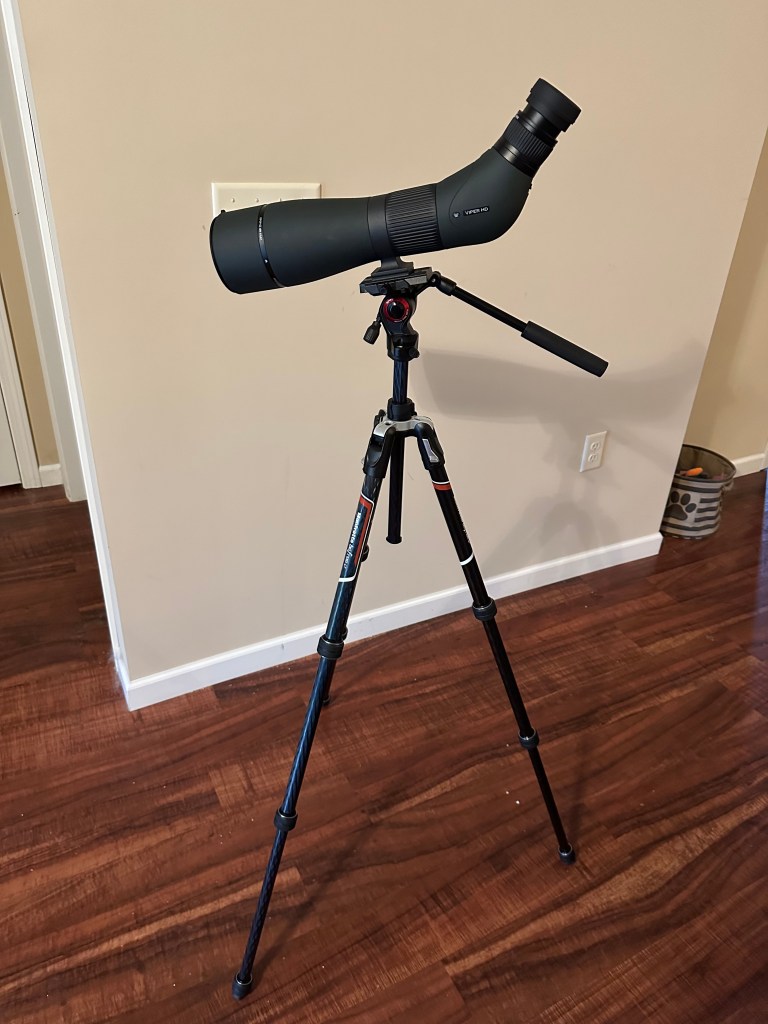
Today I finally completed my new spotting scope set-up. As I had mentioned in a post just prior to this, I had decided to return the tripod/head combination that I originally bought because of weight, and went with a new set-up. I purchased the Manfrotto Befree GT Carbon Fiber Travel Tripod, and the Befree Live Video Head. Total weight for both the scope, and the tripod combo is 8.2 lbs., a manageable weight in the field.

There definitely is a heft difference between my first purchase and this tripod/head combination. I think that there’s a bit more plastic employed in the Befree combination than the 055 tripod, which frankly is built like a tank for big video cameras. I’ve always had the unfortunate habit of over-buying in tripods, and this one certainly is different. It is very lightweight, and the head does suffer from some design flaws, notably if you are right-handed; I expect it easier for lefties, as the plate-locking mechanism and the tilt knob are both on the left side. And you can only mount the handle on the right side. My initial feeling is that the video head is a tad flimsy, but it is rated to hold 8.8 lbs. and my scope weights in a 3 lbs. less, so things should be fine. I will soon be doing reviews of both when I am able to get them out into the field.

New scope incoming

So last night, I decided to take the plunge. Surfing different sites, and weighing a sales specialist’s thoughts on “reasonably priced” spotting scopes, I ordered a Vortex Viper HD 20-60×85 spotting scope. I was planning on purchasing it through Optics4Birding, which I highly recommend, but they currently have a 6-8 week backorder wait. I don’t like to wait. Now, the scope retails for $899 at almost all dealers. But, when I went to B&H Photo, they had an email connection for best price, which I hit up. The B&H price? $749, so even with sales tax, I was out at under $800, a $100 savings! And B&H offers free two-day FedEx shipping on its products, so as this seemed like a win-win for me, I ordered it.

The Vortex HD 20-60×85 angled spotting scope has a 20-60x magnification with an 85mm objective lens diameter, is 17.5″ long and weighs 4.8 lbs. It is made of ArmorTek, has a built-in sun shade, and its glass is XR fully multicoated. This scope is in fact a step down from what I had previously owned – Zeiss Victory Harpia 95 – but from all the reviews I have read and input from sales specialists, it’s supposed to be a great scope and a much more manageable price. The Harpia scope that I had currently retails for almost $5000 new, and weighs over 5 lbs. When I get my new scope and have time to take it into the field, I will post comments here about it.

So I got the scope. I checked out my current tripod, and it weighs a TON. That was the next thing that I worked on. There are so many different tripods and combinations that it’s dizzying. I looked at the Vortex carbon fiber, but got scared away from user reviews stating that it has issues with leg breaks and becoming unslotted, among other things. I looked at a couple of other brands, including Field Optics Research, Celestron, Slik, and Gitzo. It turned out that with the prices of these other companies, I could afford to purchase a Manfrotto tripod, which I love. They’re less expensive the Gitzo most of the time, and I feel just as good, if not better. What I went with is the Manfrotto MT055CXPRO3 tripod, and the Manfrotto 502AH pro video head, also ordered from B&H. Overall weight for both the tripod and head is less than 8 lbs. The tripod itself is carbon fiber, and extends to 66.9″. I’m not so sure how the spotting scope-tripod combo will work carrying into the field, but the system will be great along shorelines within a short walk from the car. Everything is expected to arrive on Thursday, which means I’ll be out on Friday testing the combo in the field, probably at Fairport Harbor State Park first.

In other news, I’m planning on attending the Shreve Migration Sensation on March 9th in Shreve and hosted by the Wilderness Center at Shreve. I’m particularly excited by the fact that Greg Miller of “BigcYear” fame will be there, and hopefully I can meet him and get a selfie! And of course there will be plenty of birding at various sites, including Killbuck Marsh and Funk Bottoms.