A Golden Swan…

I’ve been doing a lot of birding lately. In the last week, I managed to get to Chagrin River Park, Nimisila Reservoir, Portage Lakes Turkeyfoot Lake, Killbuck Marsh-Wright Marsh, and Sandy Ridge Reservation. I got lots of FOY birds, and my count for the year is now at 62, an ok-enough number. Not that I’m birding for my count.

I went to a new birding hotspot for me on Sunday, the Wright Marsh in Wayne County, southwest of Wooster. It was not fun. There are two entry areas, and the first is at a deadend with a small lot for cars. I parked there, got the scope all set up, and headed out. this was a close to bushwhacking I’d ever done, walking down a tight path leading into a wide open field of scrub brush and long grasses. I just stood there for a bit; I could see the marsh, but wasn’t sure of where to go. I walked a bit toward the marsh on what appeared to be a very basic trail, and then I just stopped. It was likely the first time I didn’t feel safe. I wasn’t overly certain of the path back and I decided to go no further. So I walked back to the car, and on the way flushed a Woodcock! FOY!

Now the reason for my going to Wright was to hopefully see a Bewick’s Tundra Swan. It’s a eurasian Tundra Swan, marked by a large patch of yellow on the base of the bill by the eye, nearly 50% of the entire bill, and is a rarity. After getting back to my car, I drove to the second egress into the marsh. Hoisting the scope on my shoulder, I headed out to see what I could. This particular part was diked into several areas, and it was the furthest pond that people were gathered at. The reports from the day prior were more than 120 Tundras plus the Bewick’s. I got to the end by the pond where they were reported, only to learn that about an hour before, they had all flown away. Not a single swan was present. Tallk about timing, as the Bewick’s was with the flock, and now gone. It just made for a bad day overall. I stayed for awhile, looking at all the Canada Geese, some Wigeons and Pintails, and that was about it for me. I had had it, so I drove home.

Today was a decent day at Sandy Ridge. Its been a beautiful day, 70F in early March and full of sunshine. Surprisingly, I didn’t see any of the usual suspects; Downy Woodpecker, Tufted Tit, Nuthatch – I didn’t even hear one. But it was a good day for ducks, with American Wigeon, Hooded Merganser, Ring-billed Duck, Lesser Scaup, and FOY Northern Shovelers. I also got to watch a wonderful Cooper’s Hawk soar in the sky above me, and that was picturesque. A pair of Eastern Bluebirds seemingly followed me around the walkway, singing loudly on a branch about six feet away from me. Canada Geese were nesting all over, and many couples were looking for an appropriate nesting place. And there were two Tundra Swans, so majestic even in their molt, their loud honking calls going as they took off in flight to another part of the large pond. But still no warblers yet.

At Portage Lakes I got a number of different duck species, a whole gaggle of Coots – there seems to be Coots all over the place – and the special bird, Horned Grebes. At Nimisila, I continue to check for the return of Yellow-rumped and Pine Warblers, but nothing as yet. The Double-crested Cormorants are back to begin nesting on their special tree. Today I went back to Nimisila to follow a report from yesterday of an Eared Grebe, but I dipped.

Here’s the latest mosaic for March 3rd…. movement is really starting to pick up!
Chagrin and migration

Yesterday I traveled to Chagrin River Park. I haven’t been there in a really long time, and it was fun to be back there birding. The park has not changed much in the over three years since last there, except for a bit of an expansion of its boggy and pond parts; more water seems to have filled in, which was nice as I saw three Mallards there. Sadly, the Screech Owl was not visible in any of the nesting boxes, so that was a dip on him, and the one bird I really had wanted to see – Rufous-sided Towhee, yes I still call it that – was also a dip. But I did manage to tick over 20 species, led by the cute, fun White-throated Sparrow. They were all over the park yesterday, as were the resident locals, including Tufted Titmouse, White-breasted Nuthatch, Black-capped Chickadee, and Northern Cardinal. The Nuthatches and Chickadees are so tame that I managed to get very close to them, and that was fun. Next time, I have to remember to bring seeds with me; they will eat out of your hand. One FOY bird I did manage to see were Common Grackle, so I now have 54 species for the year, which is fine considering I started late in earnest.

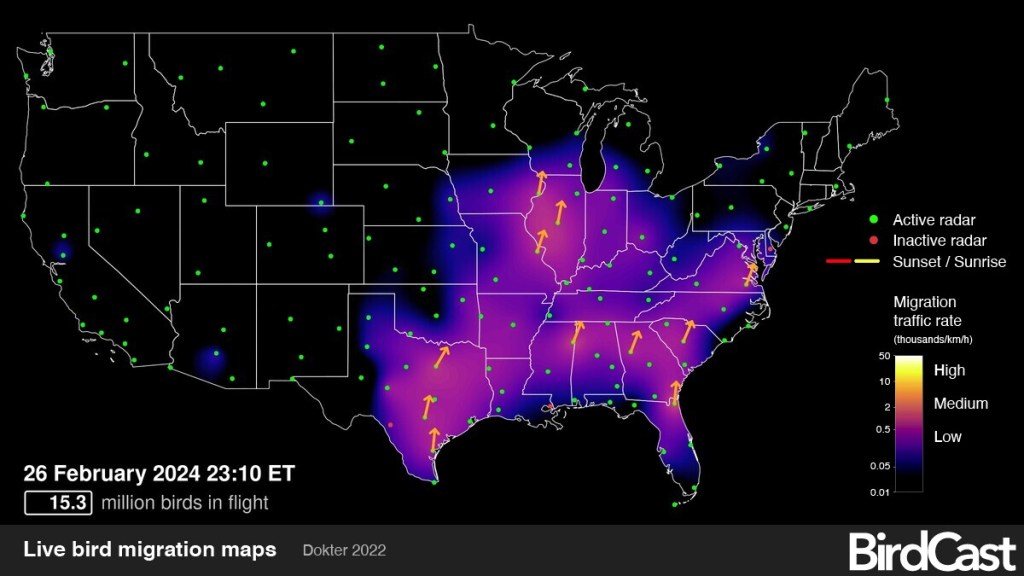
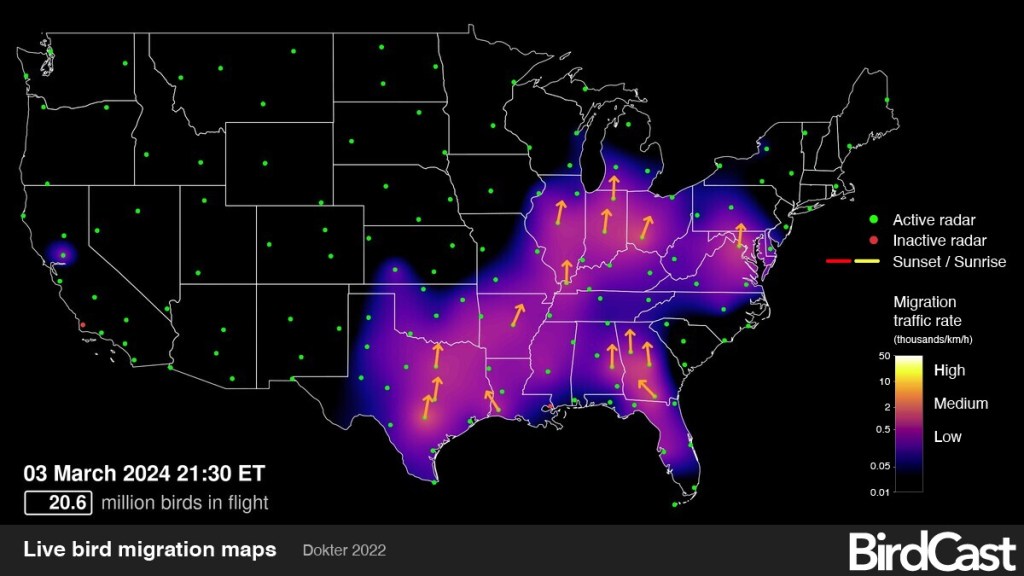
As for migrants, a smattering of warblers is showing up at various places in the state; Yellowthroat, Pine, Palm, the usual suspects early on. Killdeer have also been reported, as have Lesser Yellowlegs, so movement is occurring. I checked my Nimislia Reservoir hotspot the other day, but no Yellow-rumped Warblers in sight, nor anything else actually. I’m figuring in a couple of weeks, the Yellow-rumped will be back, as well as the Pine, which loves the very tall pine trees there. In terms of movement, BirdCast does have their national live migration map up and running and here is the look from late last night:

So I expect activity to pick up significantly in the next couple of weeks as we continue with duck migration, and enter into shorebird movement. Overall, I am wondering if this year will be an early migration for everything due to climate change – it’s a 59F February day here right now in NE Ohio. It will be interesting to see when peak migration of warblers is this year; in 2020, on May 16th, I had a 76 species day with 19 warbler species. I’m hoping to blow that record apart this year.

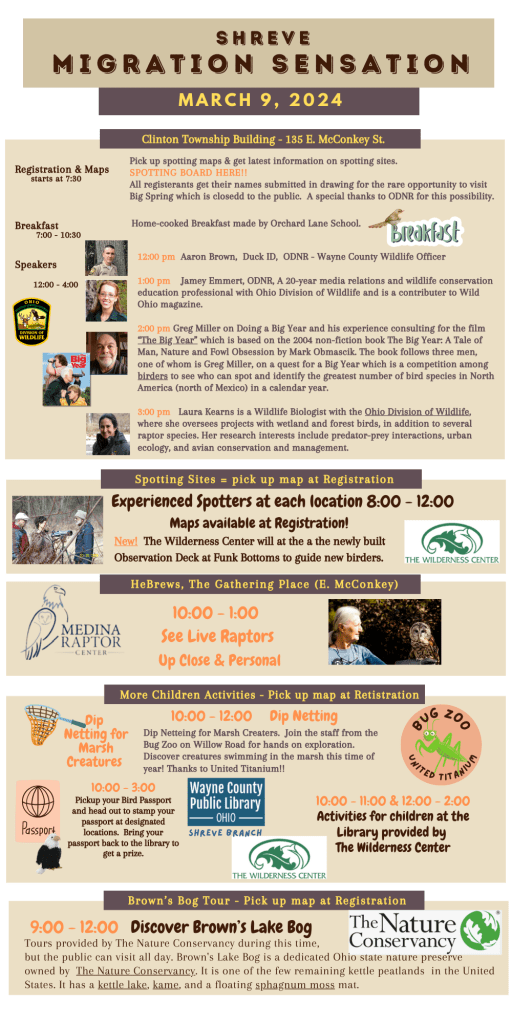
May for me is really going to be busy. Thinking of my birding schedule, the festival days start off next month on the 9th with the Shreve Migration Sensation, then take a break until May 8-10th, when I’ll be out at the Biggest Week in American Birding, my very first time attending. The following weekend is the Mosquito Lake Big Birding Weekend, where I’ll be participating in bird walks both Saturday and Sunday. Interspersed with these May events will be several trips to Mentor Lagoons, Headlands Dunes State Park, and Wendy Park, looking for migrants. My targeted species this year is the Golden-winged Warbler, along with Kirtland’s and Cerulean. I am also hoping to catch a Marbled Godwit this spring as well. I should see a Kirtland’s because on my trip to Grayling, MI in early June, but I would really love to see it at Magee beforehand. I am also truly hoping to see a Golden-winged this year, as 2020 was the last time I saw my favorite warbler.

200th Ohio Species…

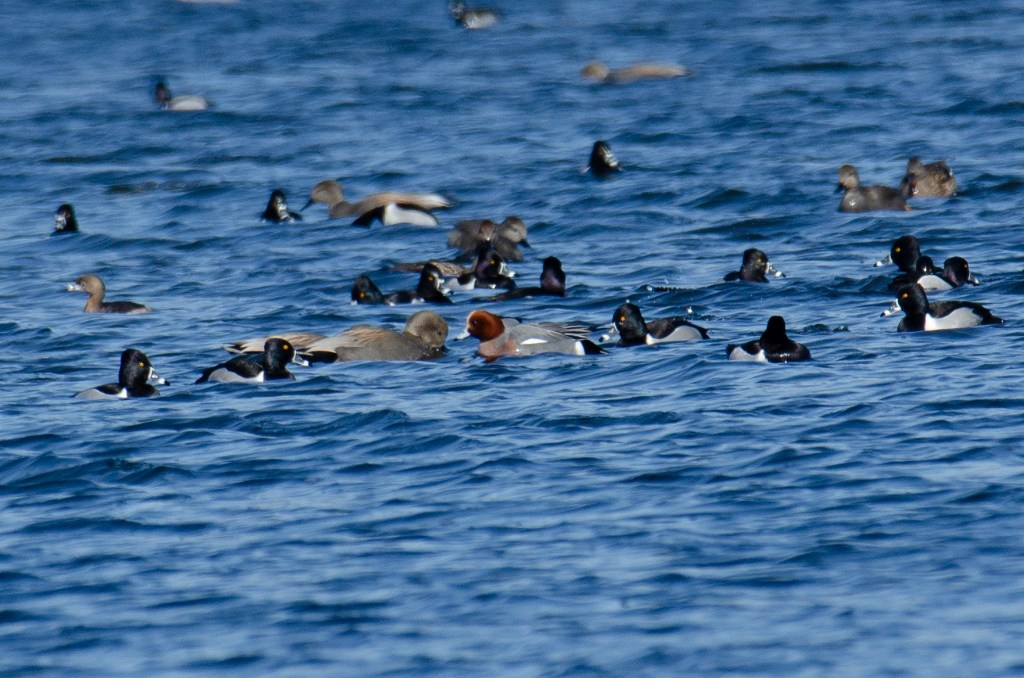
On Monday morning, I scoped my 200th species in Ohio, the Eurasian Wigeon. This pretty duck was of course buried within a flotilla of Ring-necks, Mallards, Pintails, Canada Geese, and American Wigeons. He kept ducking behind other birds and diving, and was quite difficult to track for all of us birders there trying to tick him off our lists. But I finally did see him cross my field-of-view a few times. A pretty bird, rusty red head with cream line down the middle, a rosy-colored breast, he mixes in well with Redhead, but is a light gray overall with a white wing patch. This was at the Congress Road bridge over the Mogadore Reservoir, NE Ohio. Photo below by Joe Kollar from eBird:

Monday was also the first time that I used my spotting scope in the field. There was some good news and some bad news associated with it. The good, great, news is the performance of the Vortex Viper HD spotting scope: excellent field-of-view; clear, bright and crisp display; focus and zooming actions both very responsive and easy to operate… everything’s intuitive. The scope even comes with a case, which is kind of cheap and I don’t run with it, after all it’s waterproof right? This scope performs admirably when compared to my former scope, the Zeiss Victory Harpia 95.

The bad was the tripod. I just simply overbought, especially with the Manfrotto 502AH video head; it’s simply too heavy for me, and rather difficult to figure out and operate. Everything is too big on it, and I really didn’t like it. Also the legs – the Manfrotto MT055CXPRO3 carbon fiber tripod – is a bit too unwieldy to use in the field and also a bit too heavy to be lugging around. Overall tripod/head weight comes in at 8 lbs… plus the scope, that’s 12.8 lbs total. And I did research the hell out of this, but tripods are so difficult to figure out, especially as there are so many tripod models and separate panning heads to choose from. But at the end of Monday, I knew they had to go and I had to lighten my load.

So back to the webs and looking around, reading specs and reviews all over again. Interestingly, Manfrotto makes a backpacker carbon fiber tripod, which I checked out and also spoke with a B&H salesman about. Why didn’t I see this in my first search?? It’s called the Manfrotto Befree GT Travel Carbon Fiber tripod, and is sold only as a set with a different type of head. Its general weight with attached ballhead is 3.40 lbs., and it extends fully to 63.8″, perfect for me. Because of the packaging combos, I had to purchase a separate head, the Manfrotto Befree Live Videohead, for tilt/pan activities. It’s got an 8.8 lb. load capacity and weighs only .8 lbs. The tripod/panhead combo should weigh the same at 3.4 lbs., likely lower since the ballhead should weight more. So that’s a total combined weight of 8.2 lbs., and I am expecting it to come in under that, again depending on what the ballhead actually weighs. That’s a total weight reduction of over 4 lbs.! I went ahead and ordered the tripod and the panhead, and I should have them tomorrow, to take into the field on Friday.

Shreve Migration Sensation

The Shreve Migration Sensation is a smaller, local birding festival lasting one day, in Shreve, Ohio. They are offering a breakfast, and various birding stations around Shreve, including Funk Bottoms. I’ve never birded there, so I’m looking forward to going, and especially the prospect of meeting Greg Miller. Below is the latest flyer. You can register in advance here.

Spring Migration, Part One

Preface
This post is the first part of what to anticipate during migration this spring here in northern Ohio. Everything presented is based on data that I acquired from the Black Swamp Bird Observatory (BSBO), and later on I’ll be presenting specific species to watch for, based on their peak banding counts by BSBO for last spring.

Part One covers what we have already observed over the past two weeks or so, and what to expect during the first half of April. Part Two will cover the second half of April, which comprises the first of three major migration waves expected to hit northern Ohio. Part Three will cover the month of May, when the second and third migratory waves are anticipated, and what to expect when, broken down by weeks and dates. I hope that you find this information useful, and remember, these are guidelines, not absolutes!

So, here we are at the end of March, and birds are moving. Meadowlarks, Grackles, Red-wing and Rusty Blackbirds, Tree Swallows, Eastern Phoebes, Kinglets, and other birds have rushed in. We are in the middle of waterfowl migration, likely at its peak right about now, with Loons showing up everywhere, Red-breasted Mergansers too numerous to count, and rarities like Long-tailed Ducks and Red-throated Loons making appearances. Blue-winged Teal are starting to pop everywhere, and Bonaparte’s Gulls have been showing up at many reservoirs and lakes.

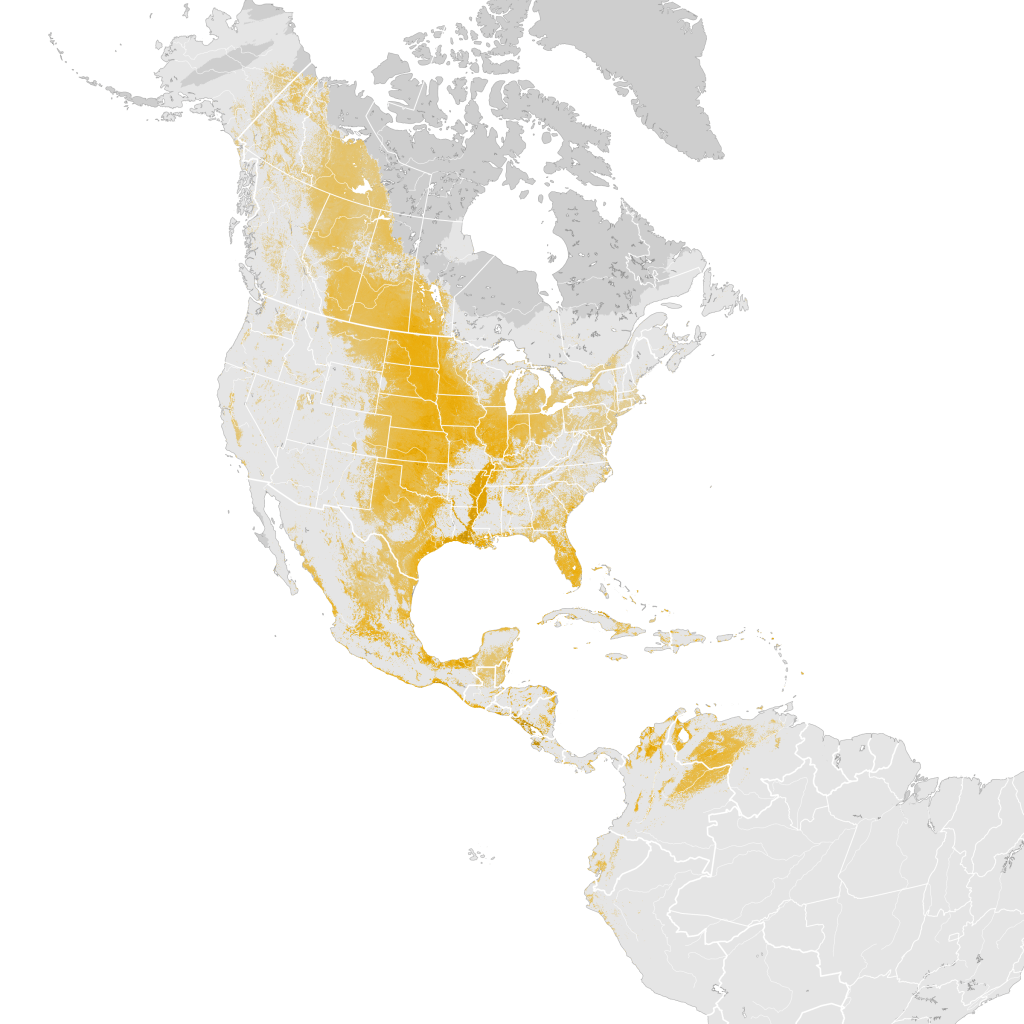
Pre-breeding migration for Blue-winged Teal ~ Cornell Lab of Ornithology

Shorebirds like Pectoral Sandpipers, and Greater and Lesser Yellowlegs are popping in certain marshy areas. Coots have been reported in great numbers at many hotspots, and raptors are starting their migration as well. The coming week or so should see good movement of Red-shoulder Hawks, Bald Eagles, and the continued increased presence of Turkey Vultures.

Next Week ~ April
The first half of April promises to be busy, as migration ramps up toward its climax in mid-May. Waterfowl movement will remain heavy, gradually declining throughout April. The raptor migration will continue, as Red-shoulder and Rough-legged Hawks continue their movement north. Sadly, Hawk Mountain is closed to visitors due to COVID-19, but look toward the skies in other places and you might see Cooper’s and Sharp-shinned Hawks, perhaps even a Golden Eagle.

Early shorebird migration will continue and begin to ramp up as well, with American Golden Plovers on the move. Expect an influx of Flickers, Hermit Thrushes, Winter Wrens, Fox Sparrows, and Yellow-rumped Warblers. Pine Warblers are also beginning to appear in the lower to mid-half of Ohio.