Not a good day

Yesterday was a very promising day. Great weather and several hotspot stops planned, all around Shreve. I was planning to hit up Killbuck-Wright Marsh, Killbuck-Cemetery Road, Funk Bottoms and Wilderness Road. Since it promised a beautiful day, it should have been a great day of birding.

I headed out before sunrise, stopping to get water and a breakfast sandwich at McDonalds, and a coffee from Dunkin. Traffic was great, and I found myself in the parking lot of Wright Marsh just as the sun was rising. Greeted by the melody of a Song Sparrow, I got my spotting scope set up, put on my bins and headed out to the marsh. I arrived at the northernmost two ponds already having seen a good number of Ring-necks, and also many Red-wing Blackbirds and Song Sparrows; the sparrows seemed to be everywhere all at once.

I scoped the northern ponds and came up with the usual, well what I call usual, suspects: Northern Shovelers, Canada Geese, more Ring-necked Ducks, American Wigeons, Green-winged Teal, Northern Pintails. The one bird I was patiently scanning for – the Eurasian Wigeon – I could not locate. I felt like the inferior birder for not being able to find the Wigeon, as I’ve noticed I feel continually like the inferior birder. Then something strange happened.

As I was scoping for ducks, I suddenly felt ill, like my system was going to shut down and I was going to pass out. Pass out right there in the middle of the marsh. All I had been doing for the past ten minutes was looking through my scope. At the same time I felt sick, my iWatch vibrated and alerted me to the fact that my pulse had been above 120bpm for longer than ten minutes. I stopped what I was doing, and as I was shaky, thought maybe I need protein, so I popped a ClifBar and ate half of it. After a few minutes, I felt a little better but not totally solid on my feet. I made the tough decision to call it quits for the day, and shakily hiked back out to my car, from which I called my doctor for an appointment. In addition to this episode, I’ve been suffering for a while from loss of breath after doing the littlest of things. Then I headed home, feeling very defeated over the Wigeon and having to cut very short my trip.

I noticed when I got home that my heart rate was remaining high and was not coming down below 120bpm. Having not received a call-back from my doctor, I decided reluctantly to go to the local ER. This really did not go well in my opinion. I explained everything to the ER doctor, who simply had an attitude towards me, and he ordered tests. I had an EKG, chest x-ray, and blood work examining my enzymes, and everything came back normal. They gave me meds to lower my bp, and an IV infusion, and my heart rate finally came down. All of the tests – for a heart attack – came back negative and I was released. Released without any sort of explanation of any cause whatsoever. I just feel that the doctor didn’t listen to me, and I was taken for granted as a “needy” patient. Meantime, I’m worried about some arterial blockage. Anyways…

So, in the end it turned out that the Eurasian Wigeon was there in Wright Marsh all along, but in a different pool to the south. And it turned out that there were White Pelicans at Funk Bottoms. And still further, shorebirds flew into Wilderness Road… Pectoral Sandpipers were seen. Damn.

Yeah, the birds will be around again, but it makes me feel distressed, like I am not the strong birder I would like to think of myself. Only two days before I was looking at a Neotropic Cormorant, only to wait for someone to confirm that that was the bird. I just want to be a good birder, and after 50 years of doing it on and off, my trust in myself gets shaken – I was so strong a birder at 12 than I am now, or so it seems. And I wish that I had someone to bird with. It gets lonely birding by self after awhile, but the way most of the “top” birders operate around here, you’re not invited unless you have something to offer and/or are in the top counts yourself. Trust me, I’ve been turned down by several I’ve wanted to bird with for their expertise, one who had over 300 birds seen in Ohio for a year. Should it ever come to pass that someone will ask to bird with me, I promise to never do that. And that’s all I will say about that.

Shreve Migration Sensation

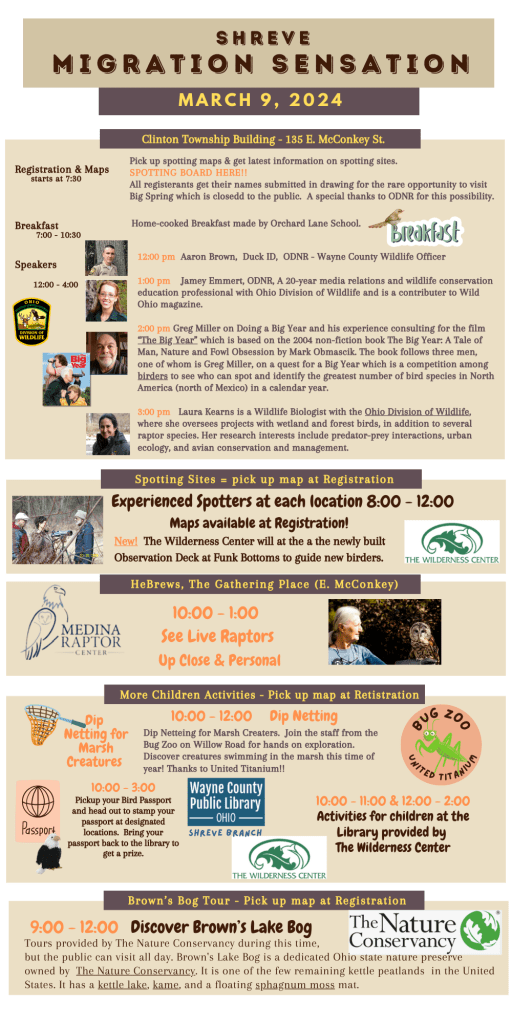
Yesterday, I went down to Shreve, Ohio to attend the Shreve Migration Sensation. It’s a one-day event incorporating all of the birding hotspots around the town. There were also other events, including presentations/talks by several birders on topics such as wildlife management, ducks and even the movie, “The Big Year.” Greg Miller of “Big Year” fame, was going to be there to talk about his big year. I didn’t stay to see him, as I was wet, hot and sweaty!

I arrived very early, getting there at around 7:10am, as the festival was scheduled to start at 7. A word of advice; nothing happens there till around 8:30am, as the guides – they had guides with scopes at every stop – didn’t start till 9am. I checked in and then got myself some breakfast. The Amish had a nice food station set up, and for a donation you could have breakfast; eggs, sausage and gravy on a biscuit, fruit cup, it was all actually very good. They had a couple of vendors there, including Time & Optics, an Amish-owned and local birding optics store. I had to check out the Swarovski 10×42 NL bins, which are super-nice and super-expensive. The Swarovski NL and the Zeiss Victory SF bins are the best money can buy, and all reports, including Time & Optics, say they view about the same. But that’s another story.

After I had finished breakfast, signed in and got my guide map, I headed out. My first stop was the Funk Bottoms observation area and platform, also known as the Funk Bottoms Wildlife Area. “This 1,536-acre wildlife area in northeastern Ohio is in portions of Wayne and Ashland counties. State Route 95,
running east-west, goes through the middle of the area, from Blachleyville (east), through Funk and Lake Fork(west). The area lies in the glaciated central hills region of Ohio, with flat to moderately rolling topography. The vast majority of the wildlife area consists of seasonally flooded moist soil meadows and bottomland hardwoods.” I got to see several FOY birds while there, including Wood Duck, Sandhill Crane and Tree Swallow. There were also Trumpeter Swans, Pintails, Lesser Scaup and immature Bald Eagles. So I’ve learned about one new place to bird regularly, and when I go to Wayne County, there are several places to visit.

My next stop was Brown’s Lake Bog Preserve, which is owned and operated by The Nature Conservancy. It is a 100 acre preserve that “protects a bog with a floating sphagnum moss mat and a 7-acre kettle lake.” This “well-preserved, virgin boreal acid bog” was dedicated as a National Natural Landmark in 1967. This Preserve is one dedicated to the plants growing there. I really didn’t see any birds so much as hear them. But I did see a Tufted Titmouse! Other birds heard were Carolina Wren, Red-bellied Woodpecker, Cardinal, Black-capped Chickadee and others. I did not spend much time there. The Bog does seem to be a great area for Rails, so I will check on that during the late spring and early summer.

Returning to town, I camped out in a coffee shop named “HeBrews,” and had a blueberry scone and a caramel macchiato. I inputted all of my bird sightings, all the while trying to kill time till the speakers started. The presentations started at 12pm, and the one I wanted to see, Greg Miller, didn’t start till 2pm. It was now 11:15am. Feeling somewhat hot, wet and sweaty after wearing my waterproof jacket all morning and getting rained on for a good portion, I made the decision to head home, and reluctantly took a pass on meeting Greg Miller.

Now, one major area that I hadn’t hit up is the Killbuck Marsh Wildlife Area, a 5,703 acre state wildlife area located in Wayne and Holmes counties. There are many places to bird Killbuck Marsh, and I had birded one a week ago at Wright Marsh, a part of Killbuck. As I was beginning my drive home, I noticed a bunch of cars and people with scopes, so I pulled off onto… Cemetery Road, a hotspot. There were numerous birders there. One person mentioned a Blue-winged Teal, and I asked her if she could relocate it with her scope, which she did… another FOY bird. There were also Green-winged Teal, Pintails, Gadwall, Wigeons, and other ducks being seen. I should’ve taken out my scope and spent much more time there, but I took the FOY Teal, and proceeded home. I’m going to revisit this coming week and will definitely be scoping the area.

Take-aways: Don’t go too early; the field guides aren’t at the keyed sites till 9am. Plan to get to the Town Hall by about 8:15, sign in, get the map and have something to eat, then head out. I would recommend hitting up Wright Marsh first, and its small lot fills up very quickly. The visit Cemetery Road at Killbuck. Travel over to Wilderness Road on the way to Funk Bottoms for all it has to offer. Hit up Funk Bottoms, then head back to Shreve for lunch. Attend the presentations if interested, and that’s it! Good birding!

It ain’t all sunshine

I just ordered from REI their Rainier waterproof jacket and pants. They weren’t too expensive, at $100 each, and I am going to need them. I didn’t have anything waterproof to wear, so I needed to make the purchase because I will be birding in the rain as soon as this weekend. I’m planning on going to the Shreve Migration Sensation on Saturday, down in Shreve and featuring birding at several hotspots there. Who knows, maybe I’ll get the Bewick’s Tundra Swan… who knows. I got expedited shipping, so I should have them on Friday.

I also need the waterproof kit for birding the Biggest Week in May. I’ll be there for four days and don’t want to waste any time not birding and more than likely it will rain a day or so. I already have my Merrell gore-tex hikers, so I should be nice and dry going forward.

Yesterday, I also ordered a birding vest. Made by Big Pockets, the vest is designed with birders in mind and with their input. The model I bought is the Equatorial Bog Pockets Vest, which has 12 pockets, one large enough to hold an iPad Mini. I been playing around with various bag solutions, some of which work for relatively short trips into the field, i.e. under two hours and parked in an easily accessible lot. I got a lumbar pack from Mountainsmith, but I grudgingly admit it’s too small for my “large” frame, i.e. belly. Le sigh… Anyway, the vest will work well for me for the longer excursions of the Big Week, or other forays into the wild. I needed something that could hold all my personal stuff and some birding stuff as well. I’ll probably look real geeky, but it cannot be helped. I’m expecting to be traveling with: regular and sun glasses, car keys, rescue inhaler, cellphone, two water bottles, energy bars and maybe gels, maybe a field guide, notebook and pens, and other unforeseen or forgotten items. The Vest will hold everything and then some. I’m planning on all-day birding during the Biggest Week, so I will need mostly everything I have at all times.

I would really like to review the gear that I get, once I figure out how to write interesting reviews! There’s just so much out there and there is no one way to bird or to outfit yourself, and it’s my hope that these posts will aid someone trying to make the decisions as I had. Please please give me some feedback about my posts, and I’ll try to address your thoughts and questions.

A Golden Swan…

I’ve been doing a lot of birding lately. In the last week, I managed to get to Chagrin River Park, Nimisila Reservoir, Portage Lakes Turkeyfoot Lake, Killbuck Marsh-Wright Marsh, and Sandy Ridge Reservation. I got lots of FOY birds, and my count for the year is now at 62, an ok-enough number. Not that I’m birding for my count.

I went to a new birding hotspot for me on Sunday, the Wright Marsh in Wayne County, southwest of Wooster. It was not fun. There are two entry areas, and the first is at a deadend with a small lot for cars. I parked there, got the scope all set up, and headed out. this was a close to bushwhacking I’d ever done, walking down a tight path leading into a wide open field of scrub brush and long grasses. I just stood there for a bit; I could see the marsh, but wasn’t sure of where to go. I walked a bit toward the marsh on what appeared to be a very basic trail, and then I just stopped. It was likely the first time I didn’t feel safe. I wasn’t overly certain of the path back and I decided to go no further. So I walked back to the car, and on the way flushed a Woodcock! FOY!

Now the reason for my going to Wright was to hopefully see a Bewick’s Tundra Swan. It’s a eurasian Tundra Swan, marked by a large patch of yellow on the base of the bill by the eye, nearly 50% of the entire bill, and is a rarity. After getting back to my car, I drove to the second egress into the marsh. Hoisting the scope on my shoulder, I headed out to see what I could. This particular part was diked into several areas, and it was the furthest pond that people were gathered at. The reports from the day prior were more than 120 Tundras plus the Bewick’s. I got to the end by the pond where they were reported, only to learn that about an hour before, they had all flown away. Not a single swan was present. Tallk about timing, as the Bewick’s was with the flock, and now gone. It just made for a bad day overall. I stayed for awhile, looking at all the Canada Geese, some Wigeons and Pintails, and that was about it for me. I had had it, so I drove home.

Today was a decent day at Sandy Ridge. Its been a beautiful day, 70F in early March and full of sunshine. Surprisingly, I didn’t see any of the usual suspects; Downy Woodpecker, Tufted Tit, Nuthatch – I didn’t even hear one. But it was a good day for ducks, with American Wigeon, Hooded Merganser, Ring-billed Duck, Lesser Scaup, and FOY Northern Shovelers. I also got to watch a wonderful Cooper’s Hawk soar in the sky above me, and that was picturesque. A pair of Eastern Bluebirds seemingly followed me around the walkway, singing loudly on a branch about six feet away from me. Canada Geese were nesting all over, and many couples were looking for an appropriate nesting place. And there were two Tundra Swans, so majestic even in their molt, their loud honking calls going as they took off in flight to another part of the large pond. But still no warblers yet.

At Portage Lakes I got a number of different duck species, a whole gaggle of Coots – there seems to be Coots all over the place – and the special bird, Horned Grebes. At Nimisila, I continue to check for the return of Yellow-rumped and Pine Warblers, but nothing as yet. The Double-crested Cormorants are back to begin nesting on their special tree. Today I went back to Nimisila to follow a report from yesterday of an Eared Grebe, but I dipped.

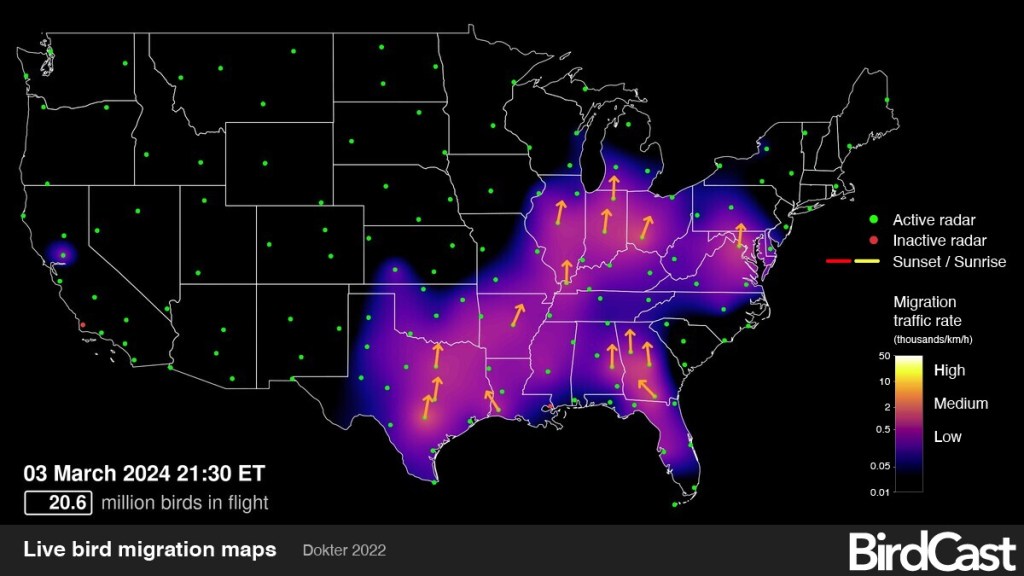
Here’s the latest mosaic for March 3rd…. movement is really starting to pick up!

Chagrin and migration

Yesterday I traveled to Chagrin River Park. I haven’t been there in a really long time, and it was fun to be back there birding. The park has not changed much in the over three years since last there, except for a bit of an expansion of its boggy and pond parts; more water seems to have filled in, which was nice as I saw three Mallards there. Sadly, the Screech Owl was not visible in any of the nesting boxes, so that was a dip on him, and the one bird I really had wanted to see – Rufous-sided Towhee, yes I still call it that – was also a dip. But I did manage to tick over 20 species, led by the cute, fun White-throated Sparrow. They were all over the park yesterday, as were the resident locals, including Tufted Titmouse, White-breasted Nuthatch, Black-capped Chickadee, and Northern Cardinal. The Nuthatches and Chickadees are so tame that I managed to get very close to them, and that was fun. Next time, I have to remember to bring seeds with me; they will eat out of your hand. One FOY bird I did manage to see were Common Grackle, so I now have 54 species for the year, which is fine considering I started late in earnest.

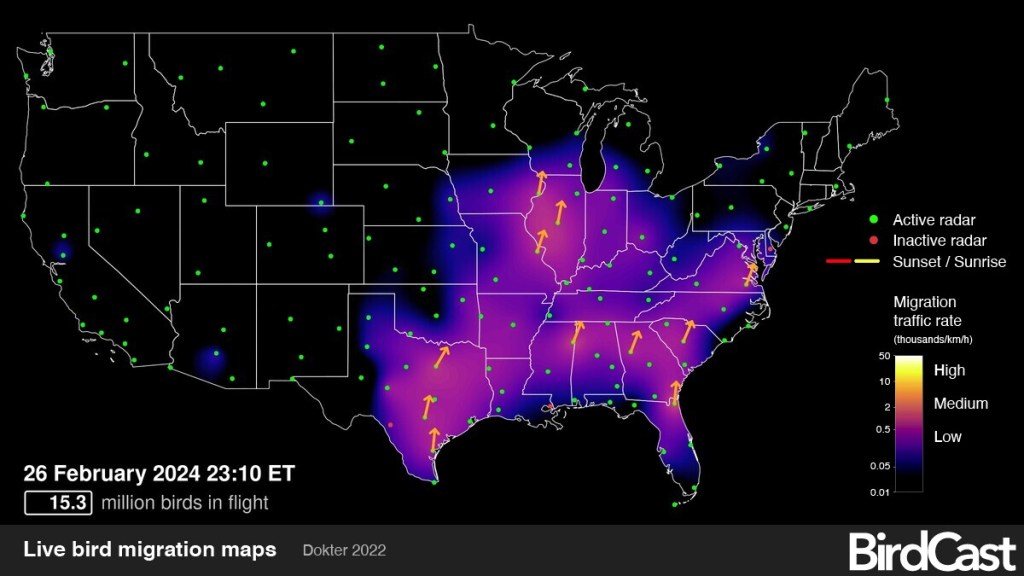
As for migrants, a smattering of warblers is showing up at various places in the state; Yellowthroat, Pine, Palm, the usual suspects early on. Killdeer have also been reported, as have Lesser Yellowlegs, so movement is occurring. I checked my Nimislia Reservoir hotspot the other day, but no Yellow-rumped Warblers in sight, nor anything else actually. I’m figuring in a couple of weeks, the Yellow-rumped will be back, as well as the Pine, which loves the very tall pine trees there. In terms of movement, BirdCast does have their national live migration map up and running and here is the look from late last night:

So I expect activity to pick up significantly in the next couple of weeks as we continue with duck migration, and enter into shorebird movement. Overall, I am wondering if this year will be an early migration for everything due to climate change – it’s a 59F February day here right now in NE Ohio. It will be interesting to see when peak migration of warblers is this year; in 2020, on May 16th, I had a 76 species day with 19 warbler species. I’m hoping to blow that record apart this year.

May for me is really going to be busy. Thinking of my birding schedule, the festival days start off next month on the 9th with the Shreve Migration Sensation, then take a break until May 8-10th, when I’ll be out at the Biggest Week in American Birding, my very first time attending. The following weekend is the Mosquito Lake Big Birding Weekend, where I’ll be participating in bird walks both Saturday and Sunday. Interspersed with these May events will be several trips to Mentor Lagoons, Headlands Dunes State Park, and Wendy Park, looking for migrants. My targeted species this year is the Golden-winged Warbler, along with Kirtland’s and Cerulean. I am also hoping to catch a Marbled Godwit this spring as well. I should see a Kirtland’s because on my trip to Grayling, MI in early June, but I would really love to see it at Magee beforehand. I am also truly hoping to see a Golden-winged this year, as 2020 was the last time I saw my favorite warbler.

Scoping out ducks – birds on the move

And so it happened today. I was at Mogadore Reservoir scoping a raft of Ring-necked Ducks when I went back to the car to get my camera. I then proceeded to set up for taking a picture, and the words flashed: “no card in reader.” I had left my sd card at home… no pictures. This is the first time that I have done this ever, and I was more than a little frustrated. So, no pics of pretty ducks in a row.

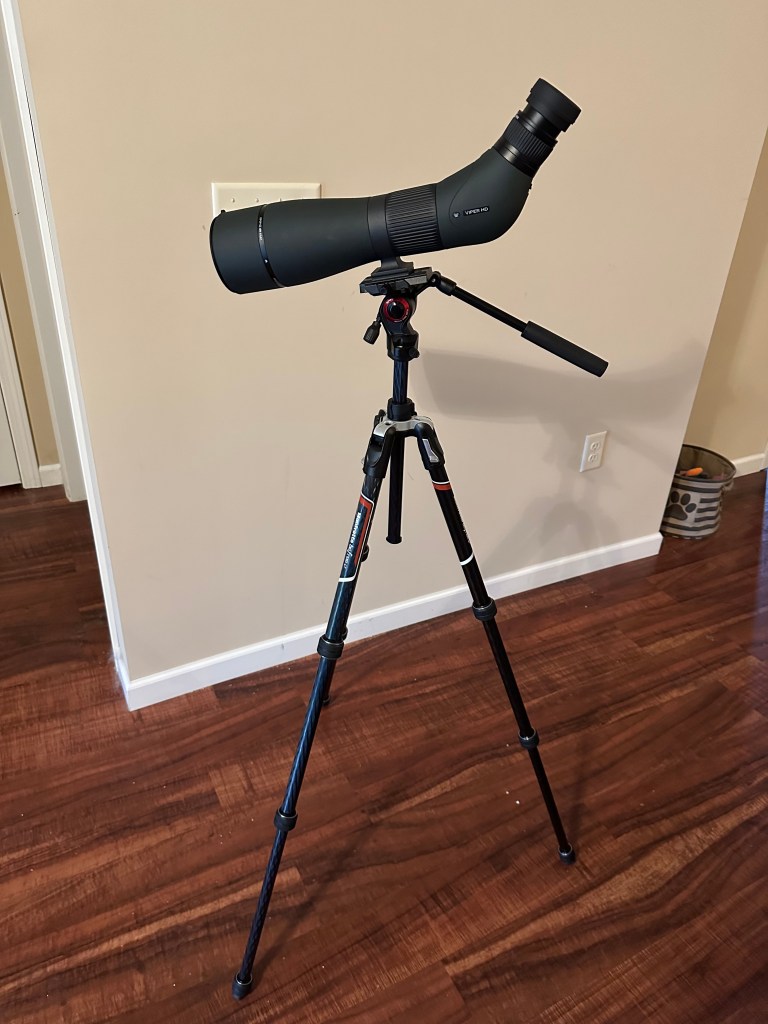
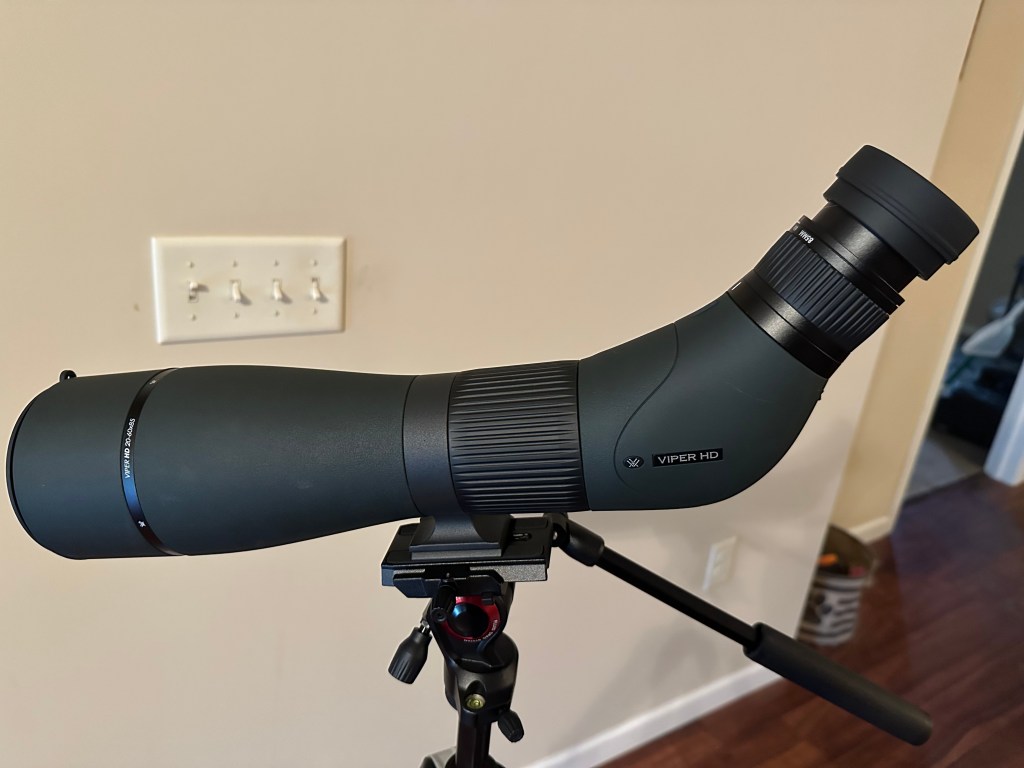
I did, however, get the opportunity to try out my new spotting scope set-up, and it’s great. The weight now is perfect since I swapped out the tripods. And the tripod/head combo is sturdy in the field, providing a perfectly shake-free viewing through the scope. The scope viewing area is bright at all levels of magnification, and focusing was easy to get a nice, sharp image. It was exciting to view the Ring-necks, American Wigeons and a lone Redhead through the lens of the scope, up close and personal. Zooming in is nice and smooth, and maintains overall sharpness as the subject takes up more of the field-of-view.

On another note, the birds, they are on the move. Northern Pintails have been around and are almost gone from local haunts, as have other ducks such as Scaup, Bufflehead, Redhead and Canvasback. Ring-necked Ducks are still foraging locally, as evidenced today, and by other field trip reports, and Green-winged Teal have begun to show up. There aer also some Northern Shovelers still foraging about. Red-winged Blackbirds have shown up in fair numbers, Grackles are being seen, as well as Towees and Meadowlark, and there are reports of Killdeer being seen, and also Yellow-rumped Warblers. So there is a continuing shift of birds occurring, as we head toward the main push of ducks, and the beginnings of shorebirds. The Bird Migration Forecasts start up on March 1st, so that data will be interesting to follow.

Gear: My new spotting scope set-up

Today I finally completed my new spotting scope set-up. As I had mentioned in a post just prior to this, I had decided to return the tripod/head combination that I originally bought because of weight, and went with a new set-up. I purchased the Manfrotto Befree GT Carbon Fiber Travel Tripod, and the Befree Live Video Head. Total weight for both the scope, and the tripod combo is 8.2 lbs., a manageable weight in the field.

There definitely is a heft difference between my first purchase and this tripod/head combination. I think that there’s a bit more plastic employed in the Befree combination than the 055 tripod, which frankly is built like a tank for big video cameras. I’ve always had the unfortunate habit of over-buying in tripods, and this one certainly is different. It is very lightweight, and the head does suffer from some design flaws, notably if you are right-handed; I expect it easier for lefties, as the plate-locking mechanism and the tilt knob are both on the left side. And you can only mount the handle on the right side. My initial feeling is that the video head is a tad flimsy, but it is rated to hold 8.8 lbs. and my scope weights in a 3 lbs. less, so things should be fine. I will soon be doing reviews of both when I am able to get them out into the field.

200th Ohio Species…

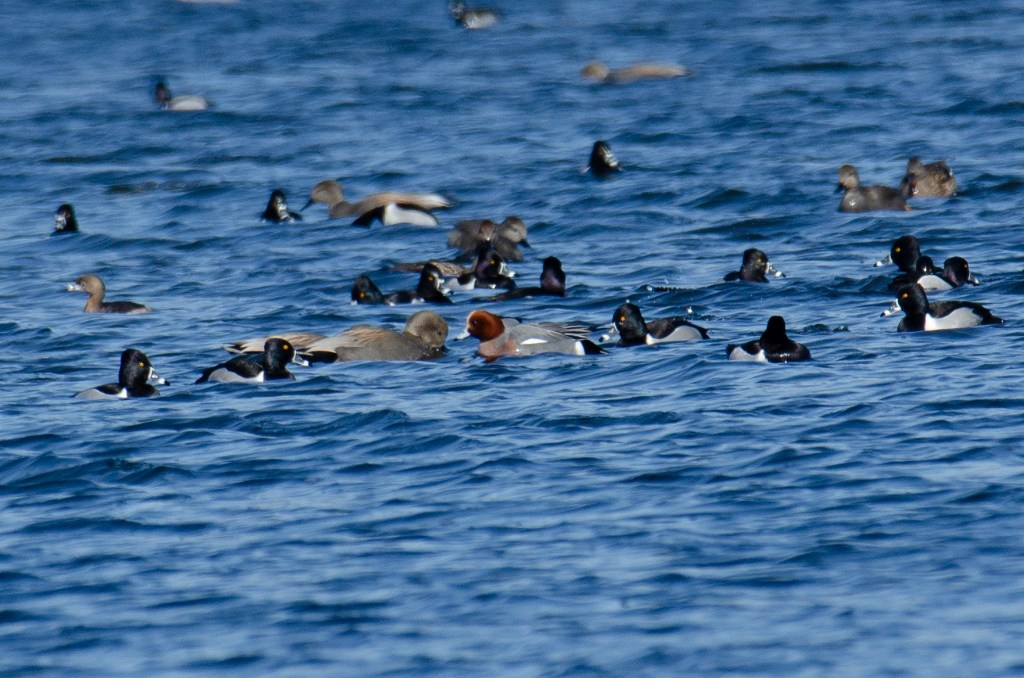
On Monday morning, I scoped my 200th species in Ohio, the Eurasian Wigeon. This pretty duck was of course buried within a flotilla of Ring-necks, Mallards, Pintails, Canada Geese, and American Wigeons. He kept ducking behind other birds and diving, and was quite difficult to track for all of us birders there trying to tick him off our lists. But I finally did see him cross my field-of-view a few times. A pretty bird, rusty red head with cream line down the middle, a rosy-colored breast, he mixes in well with Redhead, but is a light gray overall with a white wing patch. This was at the Congress Road bridge over the Mogadore Reservoir, NE Ohio. Photo below by Joe Kollar from eBird:

Monday was also the first time that I used my spotting scope in the field. There was some good news and some bad news associated with it. The good, great, news is the performance of the Vortex Viper HD spotting scope: excellent field-of-view; clear, bright and crisp display; focus and zooming actions both very responsive and easy to operate… everything’s intuitive. The scope even comes with a case, which is kind of cheap and I don’t run with it, after all it’s waterproof right? This scope performs admirably when compared to my former scope, the Zeiss Victory Harpia 95.

The bad was the tripod. I just simply overbought, especially with the Manfrotto 502AH video head; it’s simply too heavy for me, and rather difficult to figure out and operate. Everything is too big on it, and I really didn’t like it. Also the legs – the Manfrotto MT055CXPRO3 carbon fiber tripod – is a bit too unwieldy to use in the field and also a bit too heavy to be lugging around. Overall tripod/head weight comes in at 8 lbs… plus the scope, that’s 12.8 lbs total. And I did research the hell out of this, but tripods are so difficult to figure out, especially as there are so many tripod models and separate panning heads to choose from. But at the end of Monday, I knew they had to go and I had to lighten my load.

So back to the webs and looking around, reading specs and reviews all over again. Interestingly, Manfrotto makes a backpacker carbon fiber tripod, which I checked out and also spoke with a B&H salesman about. Why didn’t I see this in my first search?? It’s called the Manfrotto Befree GT Travel Carbon Fiber tripod, and is sold only as a set with a different type of head. Its general weight with attached ballhead is 3.40 lbs., and it extends fully to 63.8″, perfect for me. Because of the packaging combos, I had to purchase a separate head, the Manfrotto Befree Live Videohead, for tilt/pan activities. It’s got an 8.8 lb. load capacity and weighs only .8 lbs. The tripod/panhead combo should weigh the same at 3.4 lbs., likely lower since the ballhead should weight more. So that’s a total combined weight of 8.2 lbs., and I am expecting it to come in under that, again depending on what the ballhead actually weighs. That’s a total weight reduction of over 4 lbs.! I went ahead and ordered the tripod and the panhead, and I should have them tomorrow, to take into the field on Friday.

Notable birds and other musings

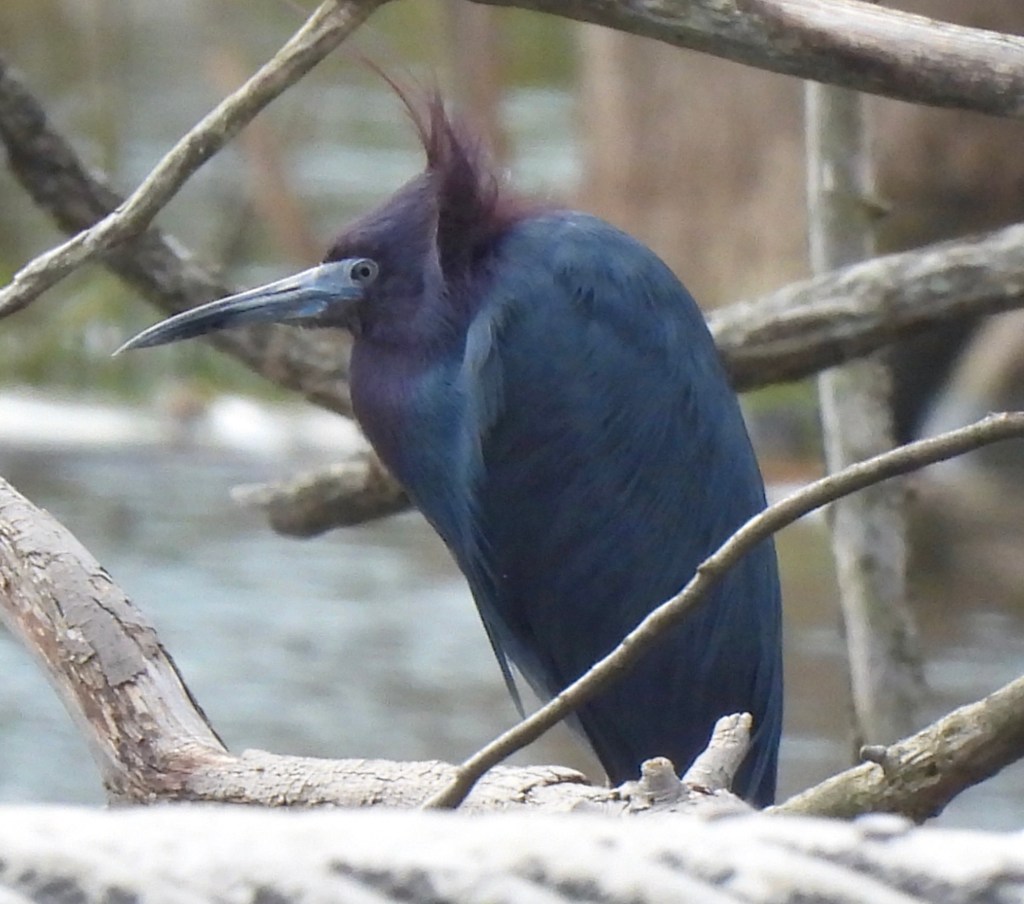
As I reflect back, there have been some notable birds in my life. My first one was actually the very first bird that I recorded seeing. I was on vacation with my grams in Ocean Park, Maine, and during our travels one day, we decided to stop at the Scarborough Marsh Nature Center. This had to be around 1974, I was twelve then. So we stop at the Nature Center, and we climb in to the observation deck, and there was a gentleman there looking at the birds with his spotting scope. And that bird, my first recorded bird, was a Little Blue Heron. It was so very special to see it for me, I’ll never forget that moment or that my grams introduced me to birding. It took me until 2000 to see another, and Mentor Lagoons in Northeast Ohio.

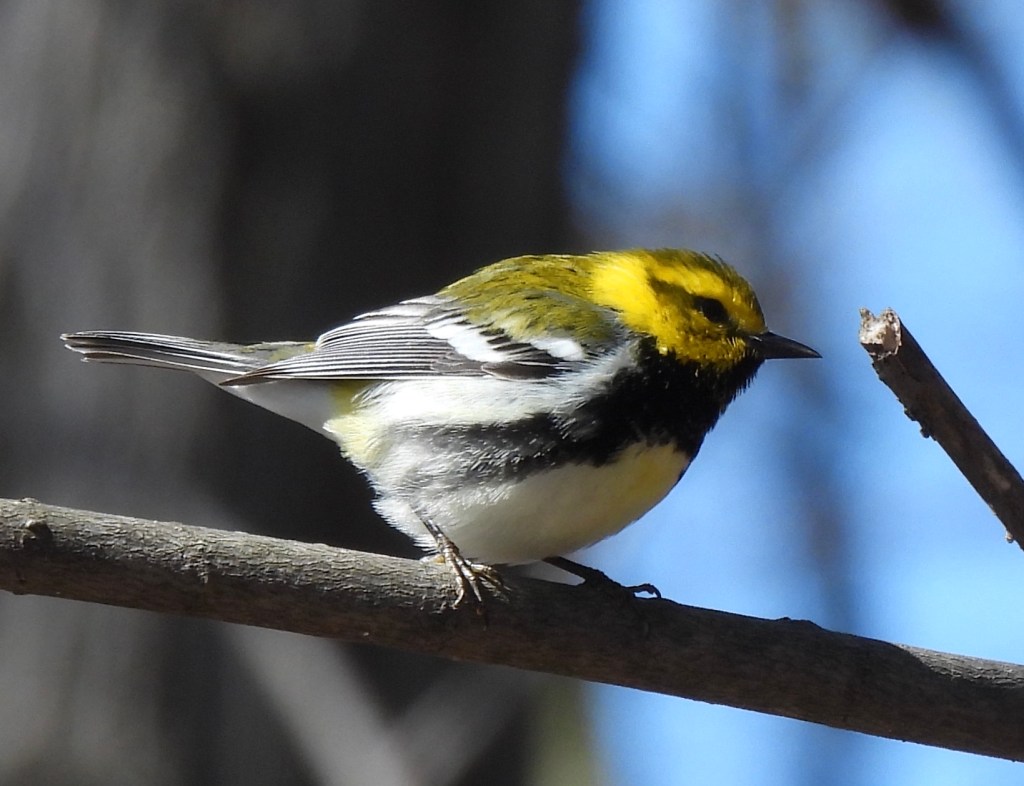
My second notable bird sighting occurred a year or so later when, on a nature walk with an adult friend through the conifer forest of Ocean Park, we spotted a Black-throated Green Warbler. This bird, I believe, was the very first warbler that I had ever seen. It was just hanging out in the trees about eye-level, and flitting about. To this day, one of my favorite warblers is a Black-throated Green. I wouldn’t see another one till 2000 as well.

Ocean Park and the southern Maine coast is where I cut my birding teeth. Two women in my life were major influencers with my birding. Both lived in Ocean Park. Mrs. Genevieve Webb was an active and early influence, and despite her being up there in age, she would pick me up at 5:30am and we would go all over birding. I saw such greats as Sandhill Crane, then a record in Maine, and a Marbled Godwit, along with many other shorebirds. Mrs. Edith Stephenson used to let me bird at her home, where in the backyard she had a small marsh. She would get Glossy Ibis, Snowy Egret, Great Blue Heron, Green Heron, and various sandpipers like Lesser Yellowleg. Her and I would also go out birding early in the mornings, the fog thick heading to Scarborough Marsh or Pine Point, down through Biddeford. Mrs. S. also taught me much about photography in general, and bird photography in particular, as she had a wall in her home devoted framed bird photographs.

In 1976, as 14 year-old, I founded the Ocean Park Bird Club. It was my goal to establish a club not unlike the Nuttall Ornithological Club in Massachusetts, but it never really took off for one, and two, I “aged out” of my interest in birds at the time – 18, I was doing other things! But, in 1976, I did lead birding trips, mostly for seniors who registered, and the Club held I think three meetings. Also in 1976, in cooperation with several individuals, I gathered and published the very first “Birds of Ocean Park” Checklist, modeled on my friend Ted Wells’ plant and flora list. I think that the Ocean Park Library likely has a copy of that original issue.

Speaking of libraries, which I love, I would spend lots of time in the Ocean Park Library, reading up on birds and viewing their mounted bird collection. My favorite books that i always took out were “The Birds of Massachusetts and Other New England States,” written by Edward Howe Forbush, my favorite birder next to Roger Tory Petersen. I once wrote to Mr. Petersen about Forbush, whom he did know, and he wrote back with some insight as I was trying to write a book about Forbush. All of my birding heroes were the late 1800-early 1900 major birders, including Nuttall, Forbush, William Brewster, Frank Chapman, Thomas Brewer, and other members of the A.O.U. as it grew into existence.

Shreve Migration Sensation

The Shreve Migration Sensation is a smaller, local birding festival lasting one day, in Shreve, Ohio. They are offering a breakfast, and various birding stations around Shreve, including Funk Bottoms. I’ve never birded there, so I’m looking forward to going, and especially the prospect of meeting Greg Miller. Below is the latest flyer. You can register in advance here.